British Wheatstone High Speed Telegraph System
The Wheatstone Telegraph System was an automated telegraph system designed to send information at higher speeds than could be accomplished by human operators.. Invented by Charles Wheatstone in 1867, the Wheatstone System was capable of transmitting & receiving up to 500 letters per minute, far faster than could be done by humans sending Morse Code manually. The Wheatstone system was used well into the 20th Century.
(Click on the pictures below to see larger versions of the photos)
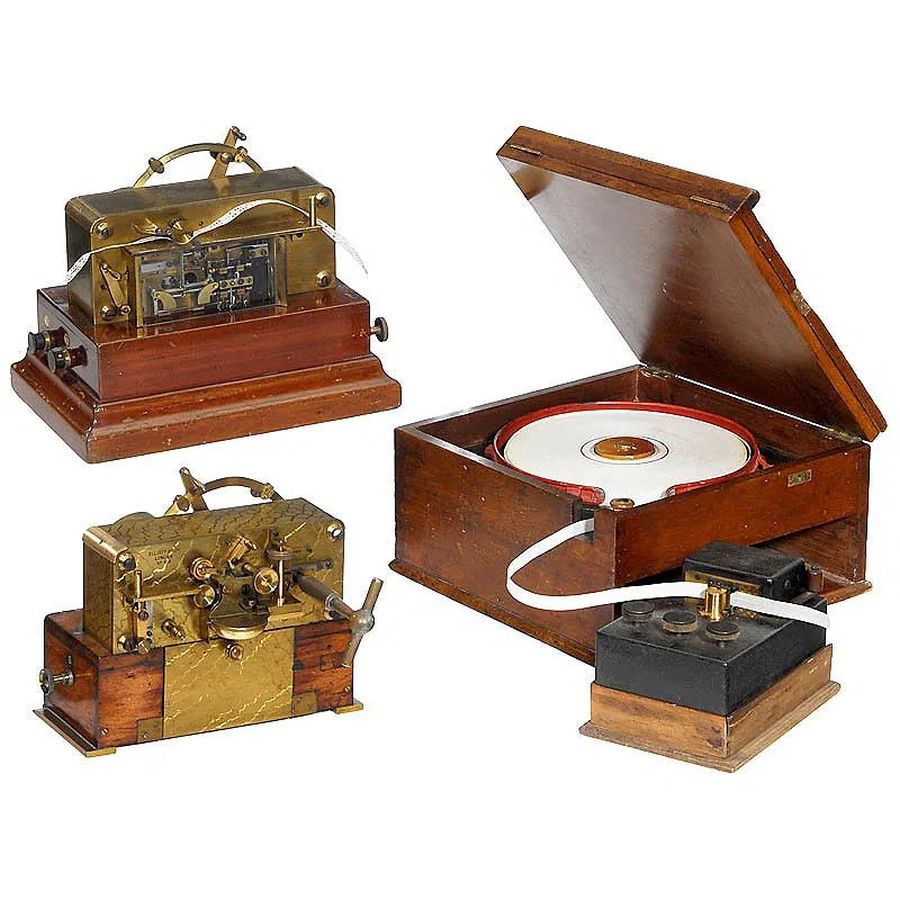 |
The Wheatstone System consisted of 3 components: The Perforator (at right), which was used to punch holes in a paper tape (called The Slip) The Tape Reader/Transmitter (upper left), which reads the holes in the Slip, converts the information to a Morse Code signal, and transmits the signal The Receiver/Printer (lower left), which receives the signal and prints it on another paper tape. |
The Perforator
 |
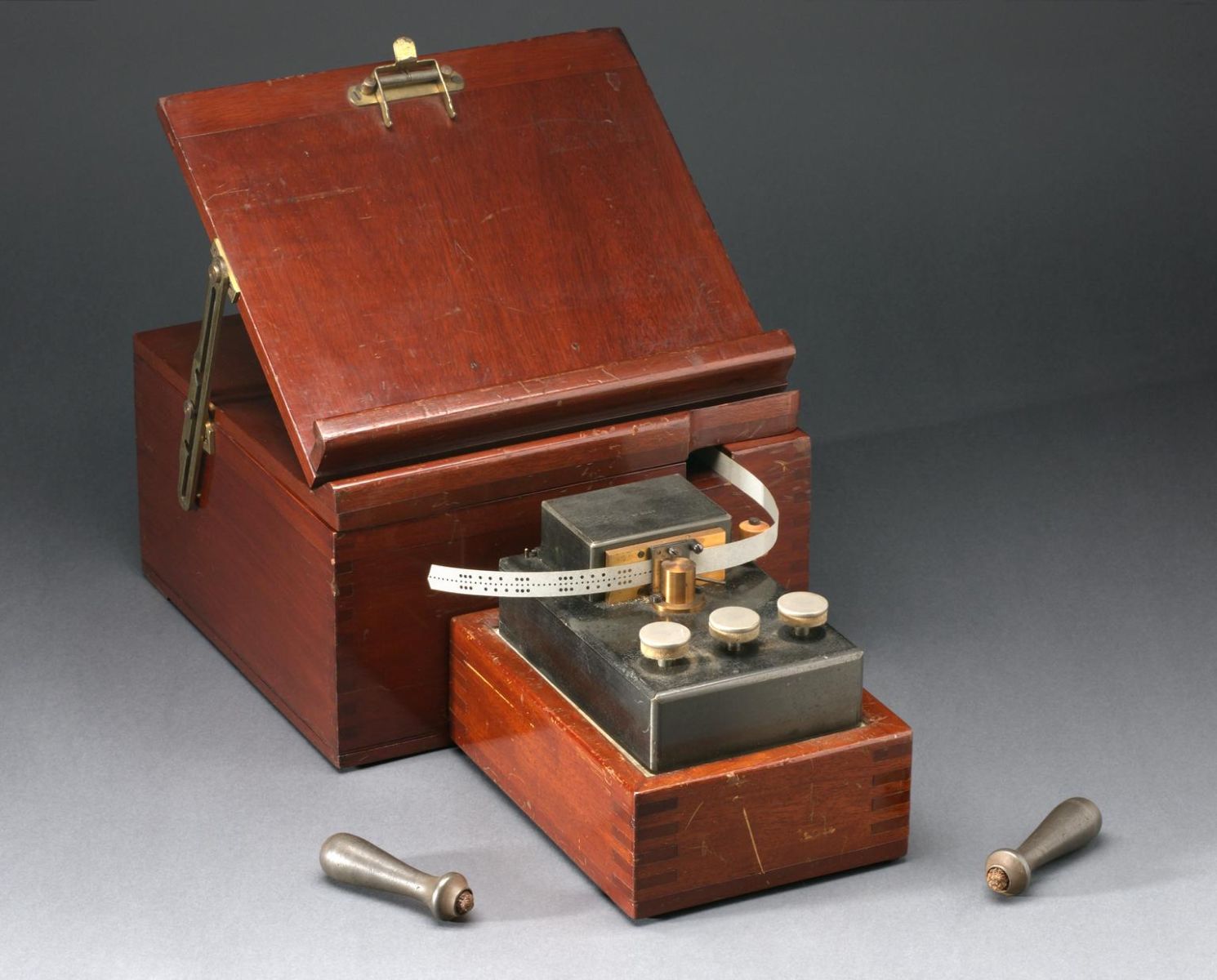 |
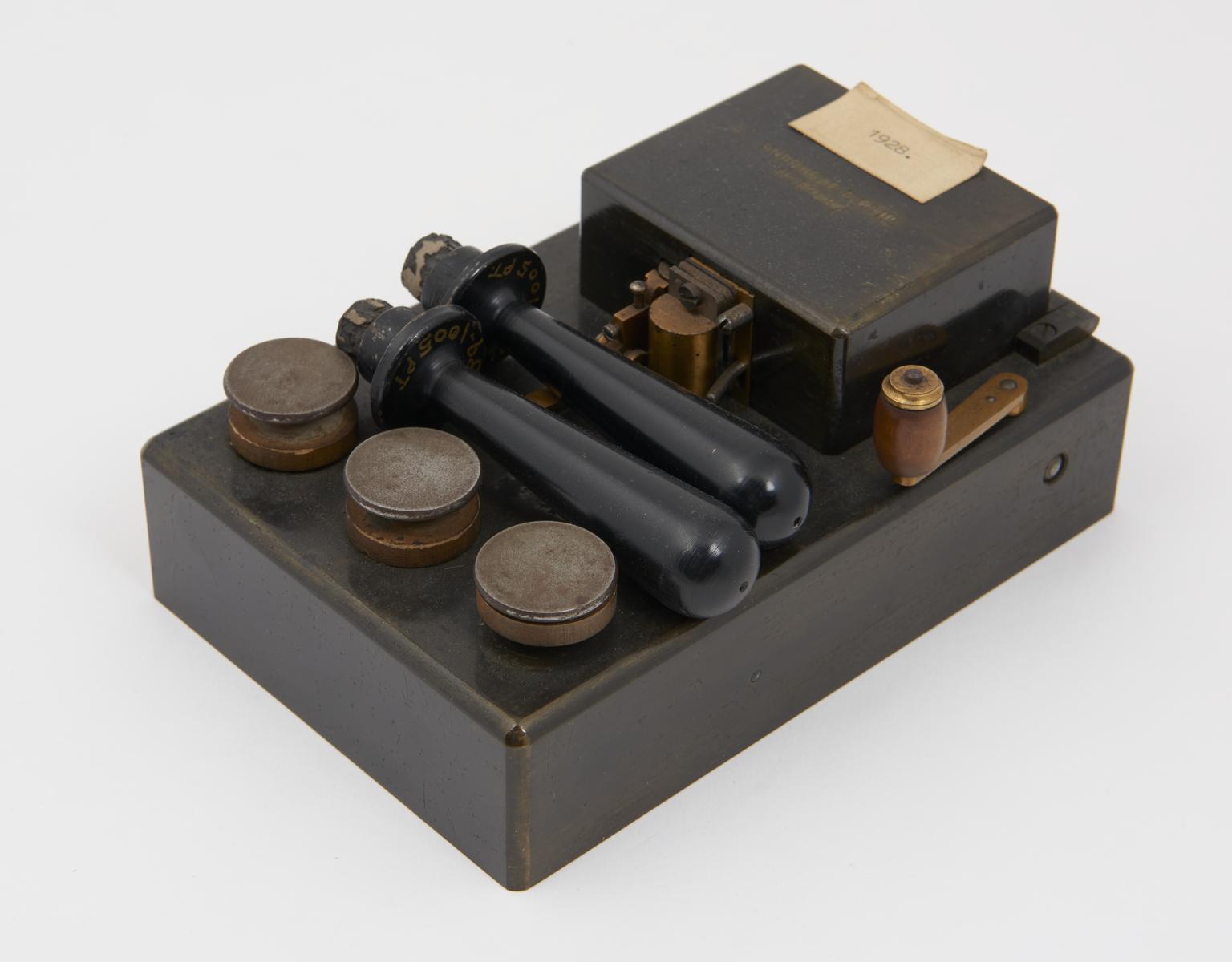
The Perforator is designed to manually punch holes in the paper tape (The Slip) which is then read by the Transmitter. The location of the holes defines dots & dashes, and this information is converted to an electrical Morse Code signal by the Transmitter. The Perforator has 3 large buttons. The left button creates a “Dot” symbol, the center button creates a space, and the right button creates a “Dash” symbol. The Perforator also creates a continuous line of small holes down the center of the Slip, which are used by the Transmitter to pull the Slip through the machine. The buttons were very difficult to press by hand so the operator typically used heavy mallets with rubber tips to press the buttons. (Right picture from Science Museum Group UK).
The Slip
 |
|
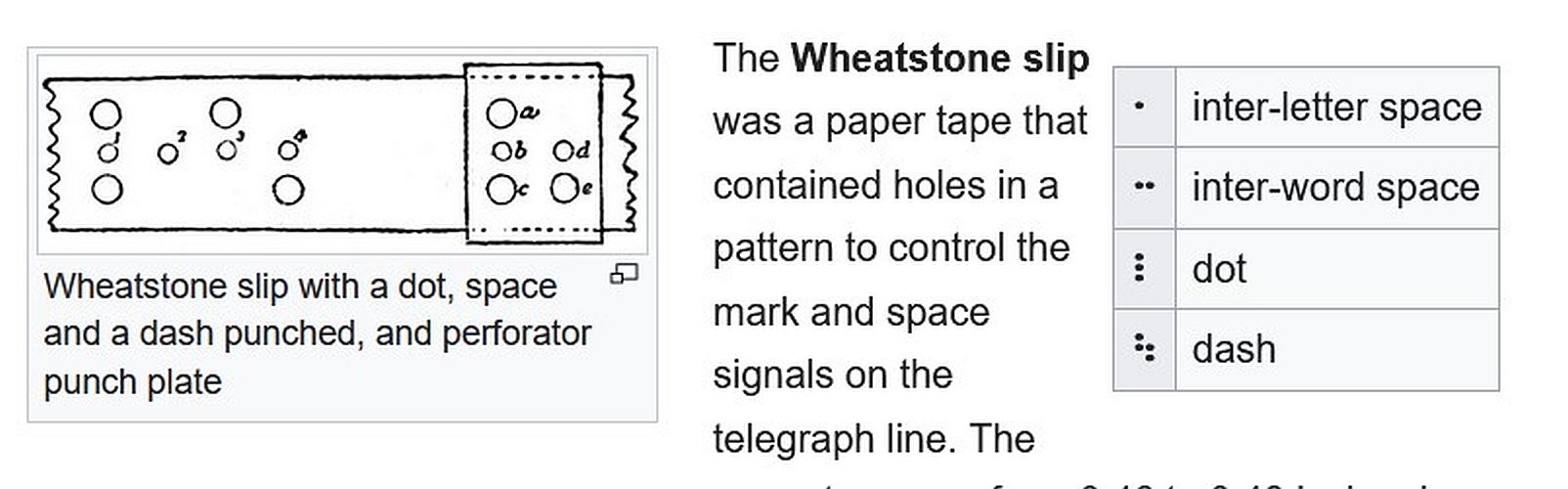
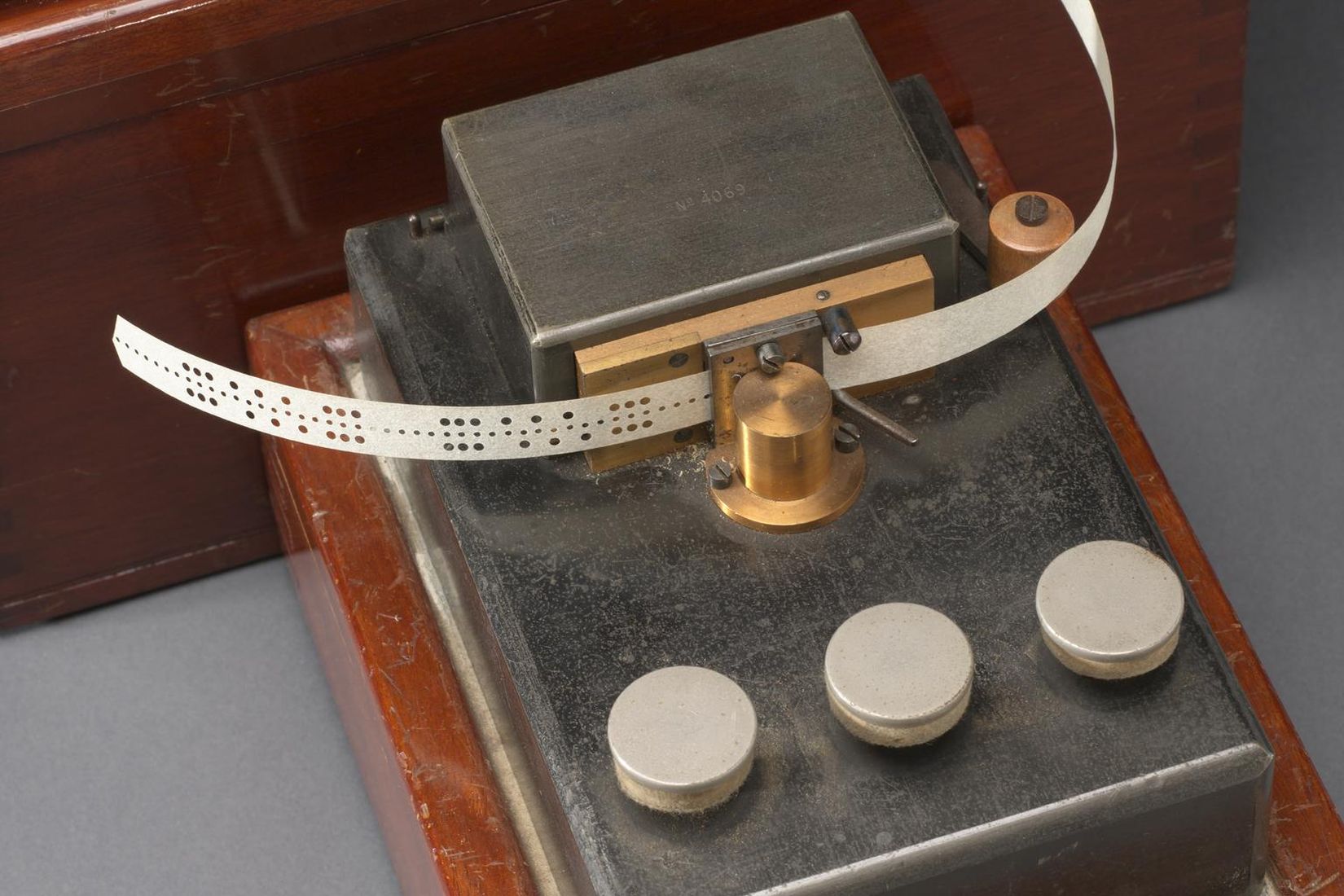
Above is an example of a paper Slip that has been punched by a Wheatstone Perforator. There are 3 rows of holes in the Slip. The center row of continuous holes is used to pull the Slip through the Transmitter. A “Dot” symbol is produced by making a hole in the top row and another hole directly underneath in the bottom row. A “Dash” symbol is produced by making a hole in the top row and a second hole below and to the right.
In the example above, the Slip reads “SOS SOS”. (Left picture from Science Museum Group UK).
The Transmitter
 |
 |
 |
 |
|---|
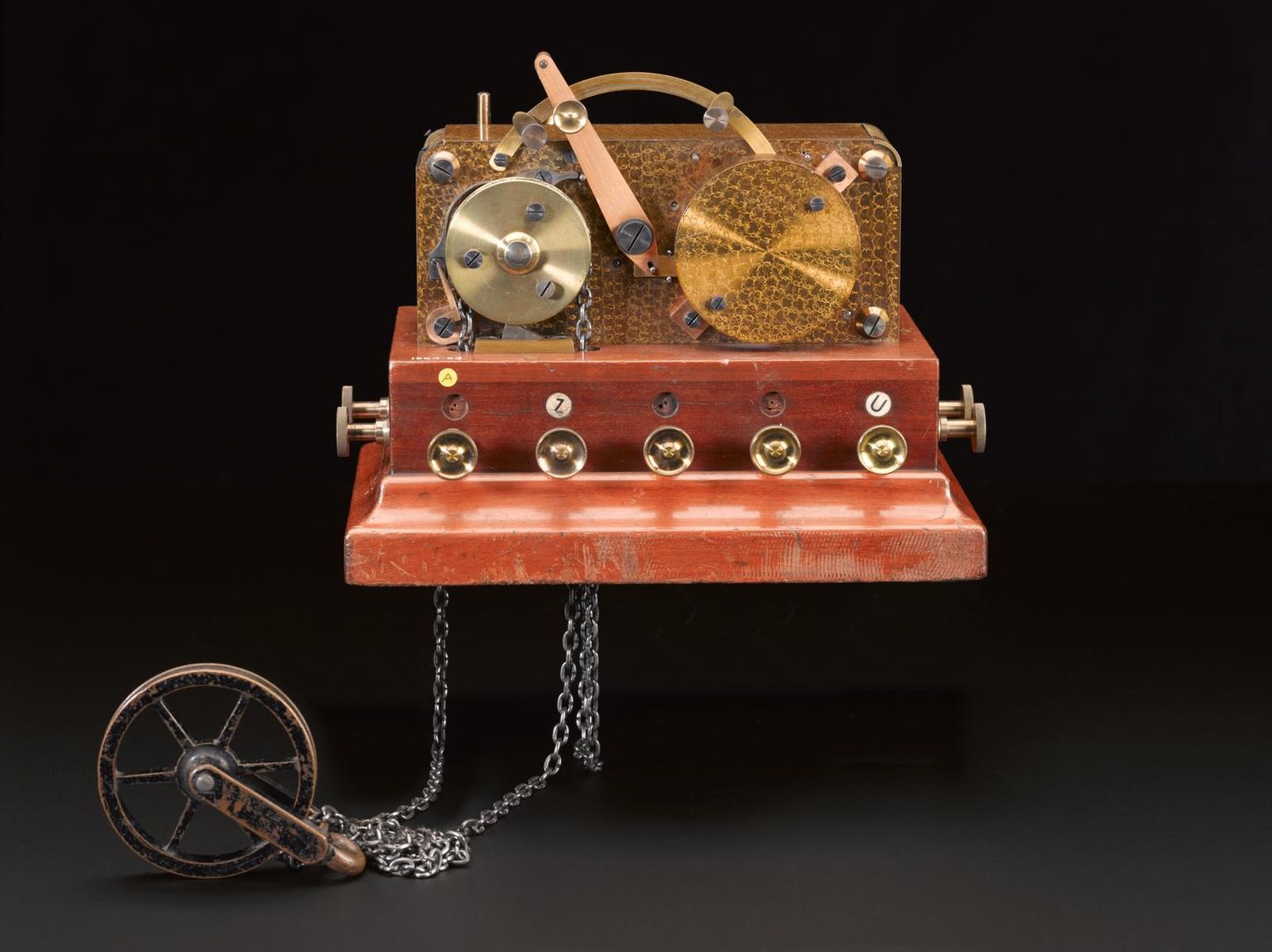
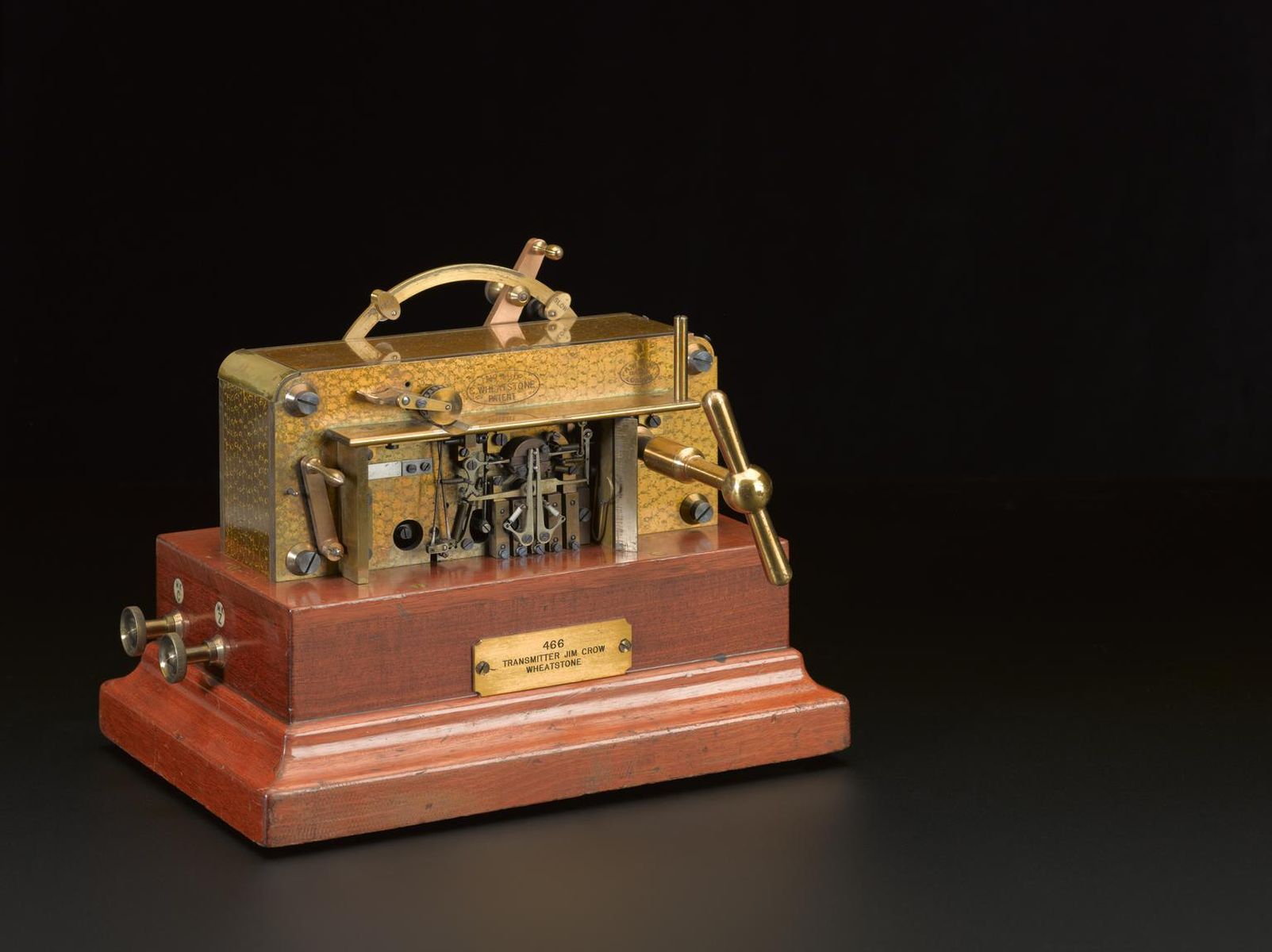
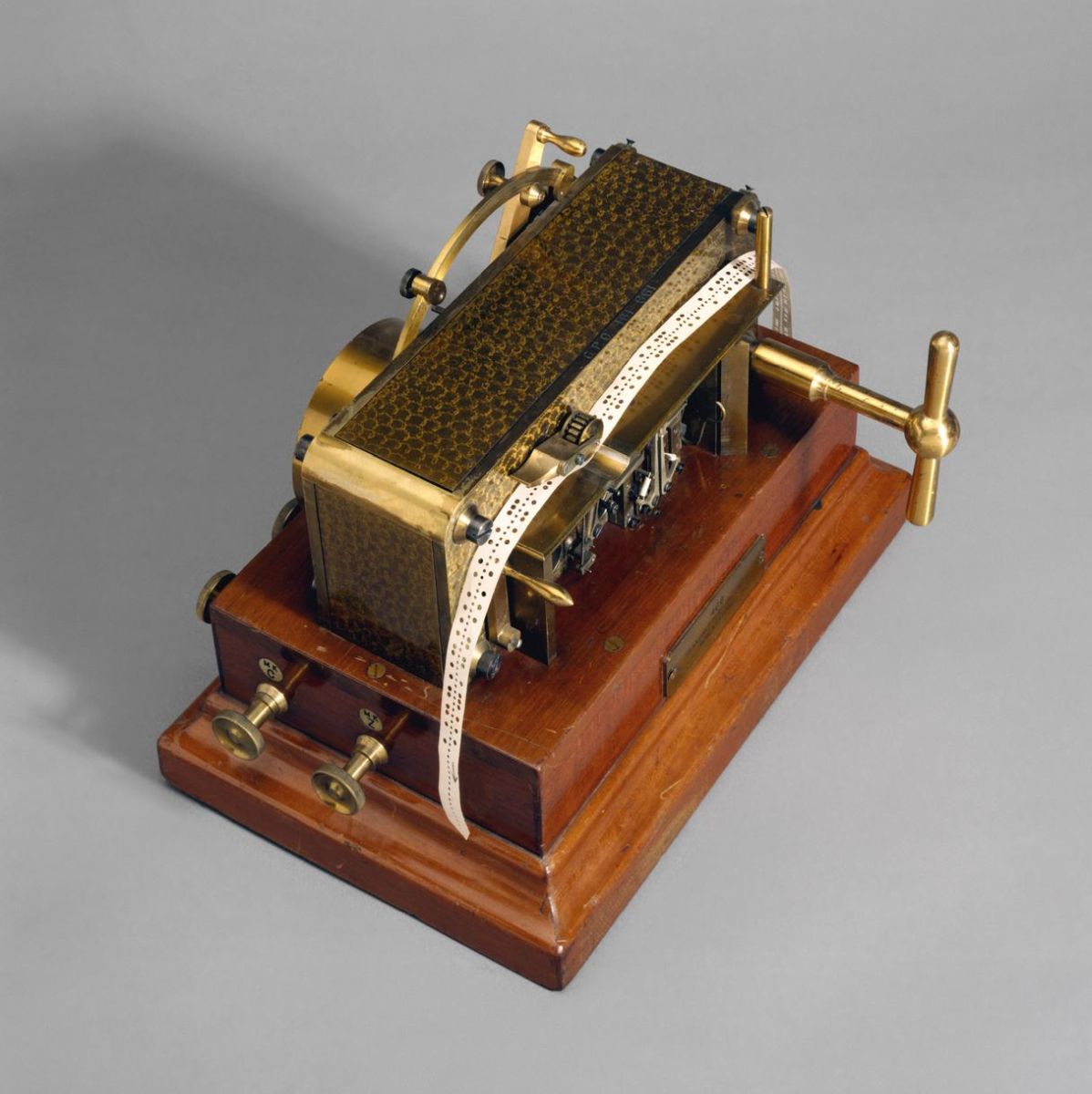
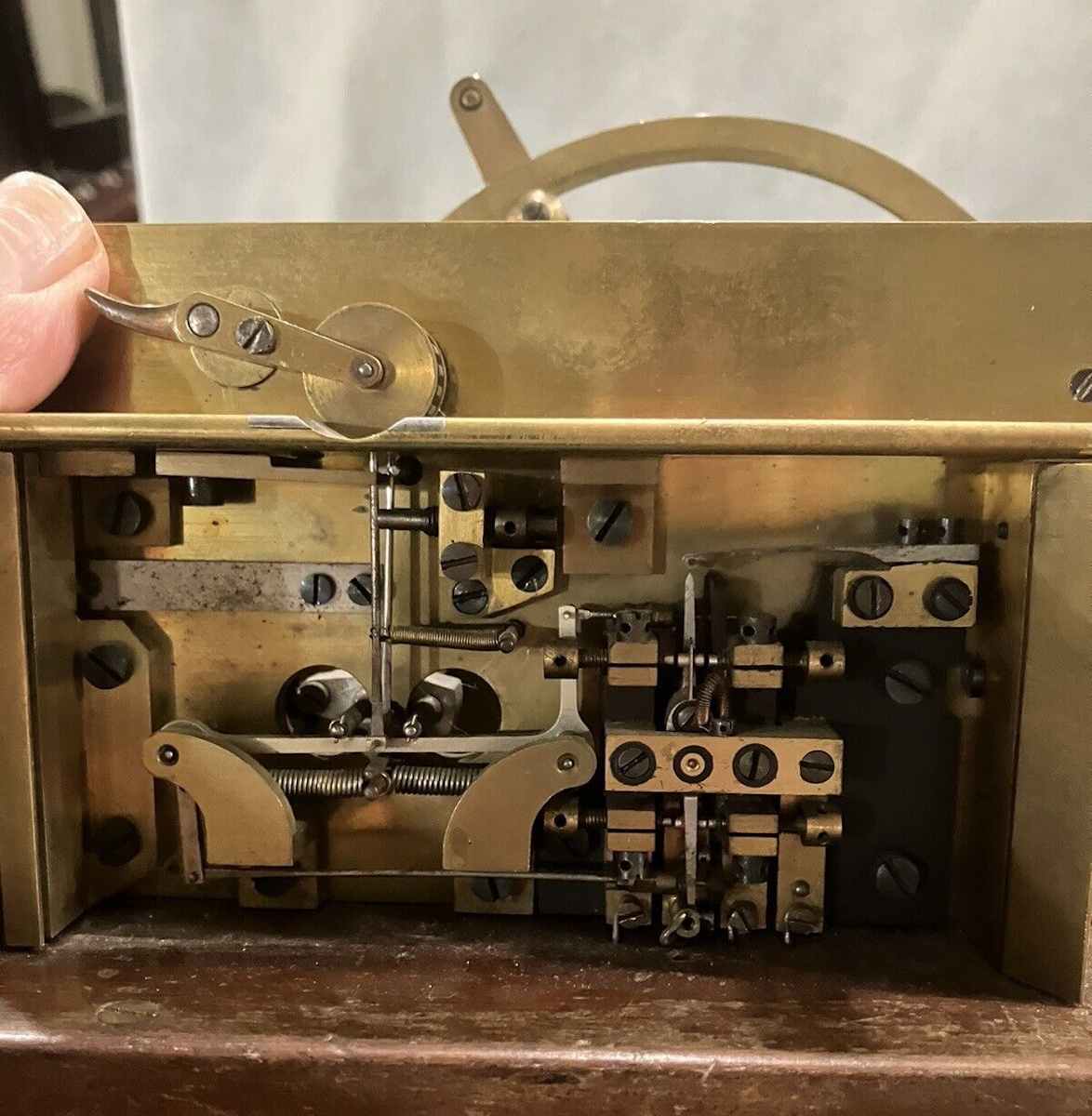
After encoding the Slip with holes, the tape is fed into the Transmitter where the Slip is pulled through the machine with a star-shaped wheel engaging with the center row of holes. Two metal pins called “Prickers” move up and down and probe for the holes in the Slip. These pins turn the transmitter current on and off according to the positions of the holes. As with standard Morse Code, the “Dash” current duration is approximately 3 times that of the “Dot” current.
The Transmitter also has a speed control lever on the front which allows the speed to be varied over a wide range.
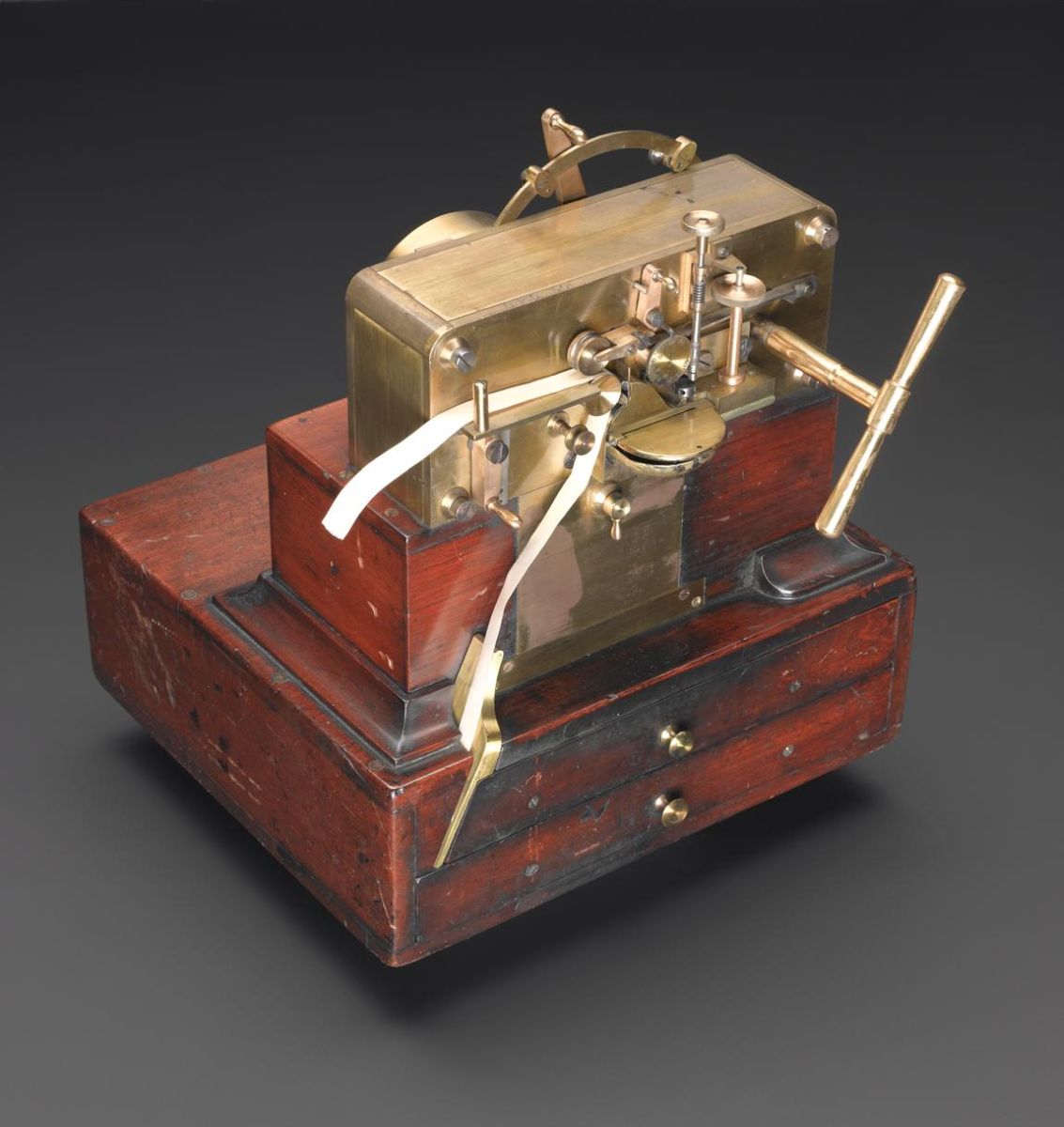
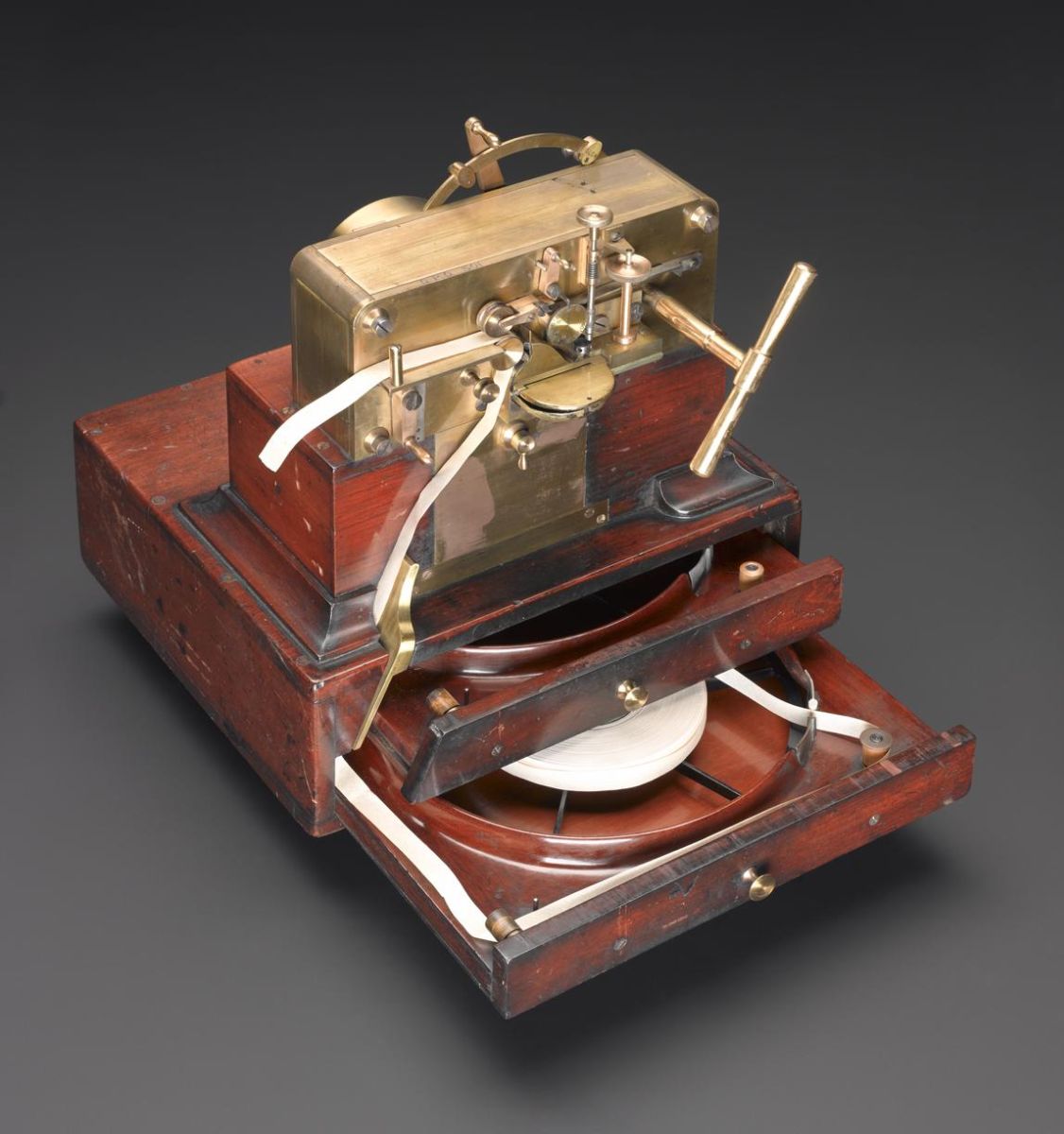
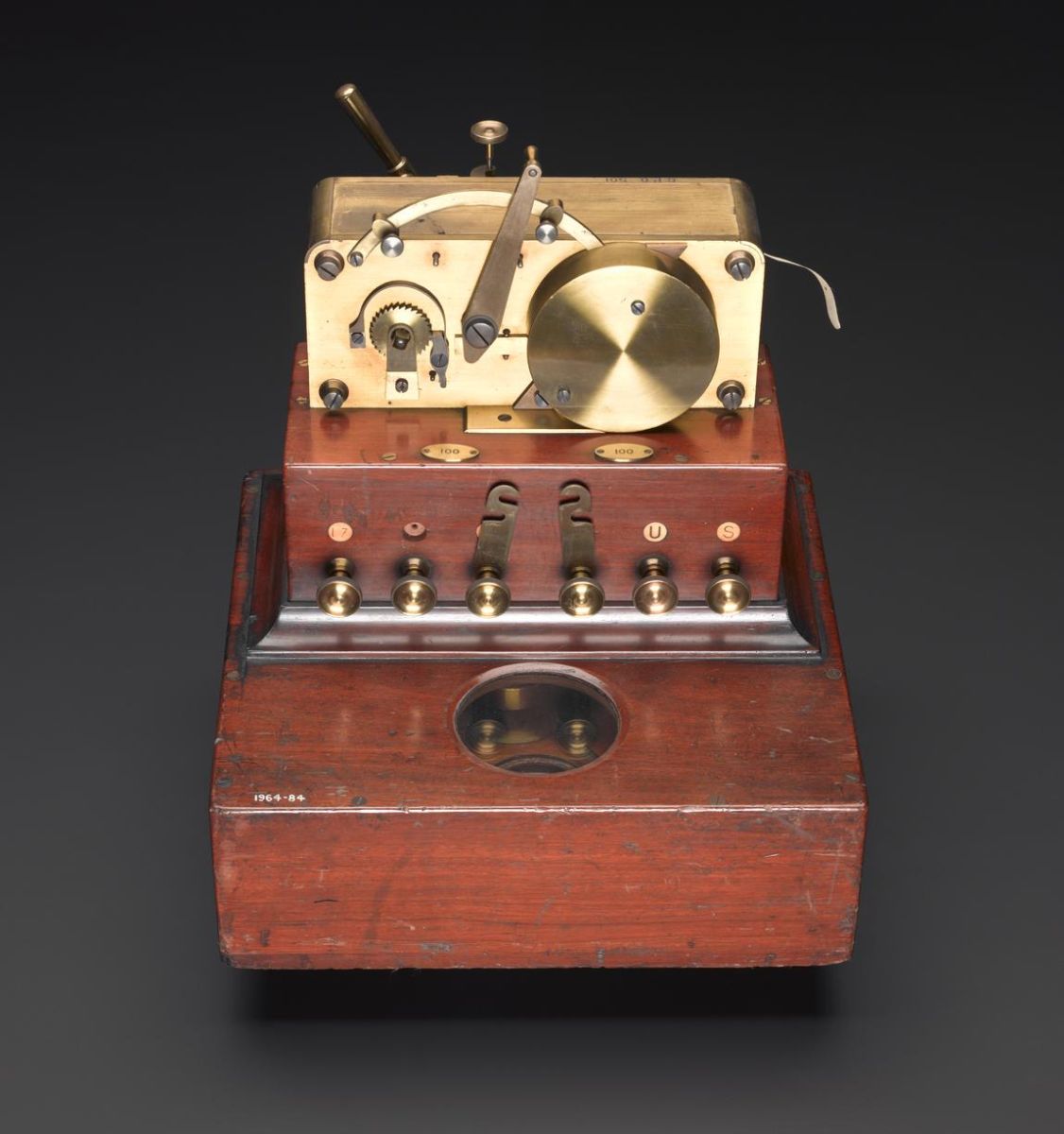
Above is a nice example of an early Wheatstone Transmitter that is powered by a chain & weight system, much like the early telegraph registers. Later Wheatstone Transmitter units ran off an electric motor. (Left 3 pictures from Science Museum UK)
The Receiver
 |
 |
 |
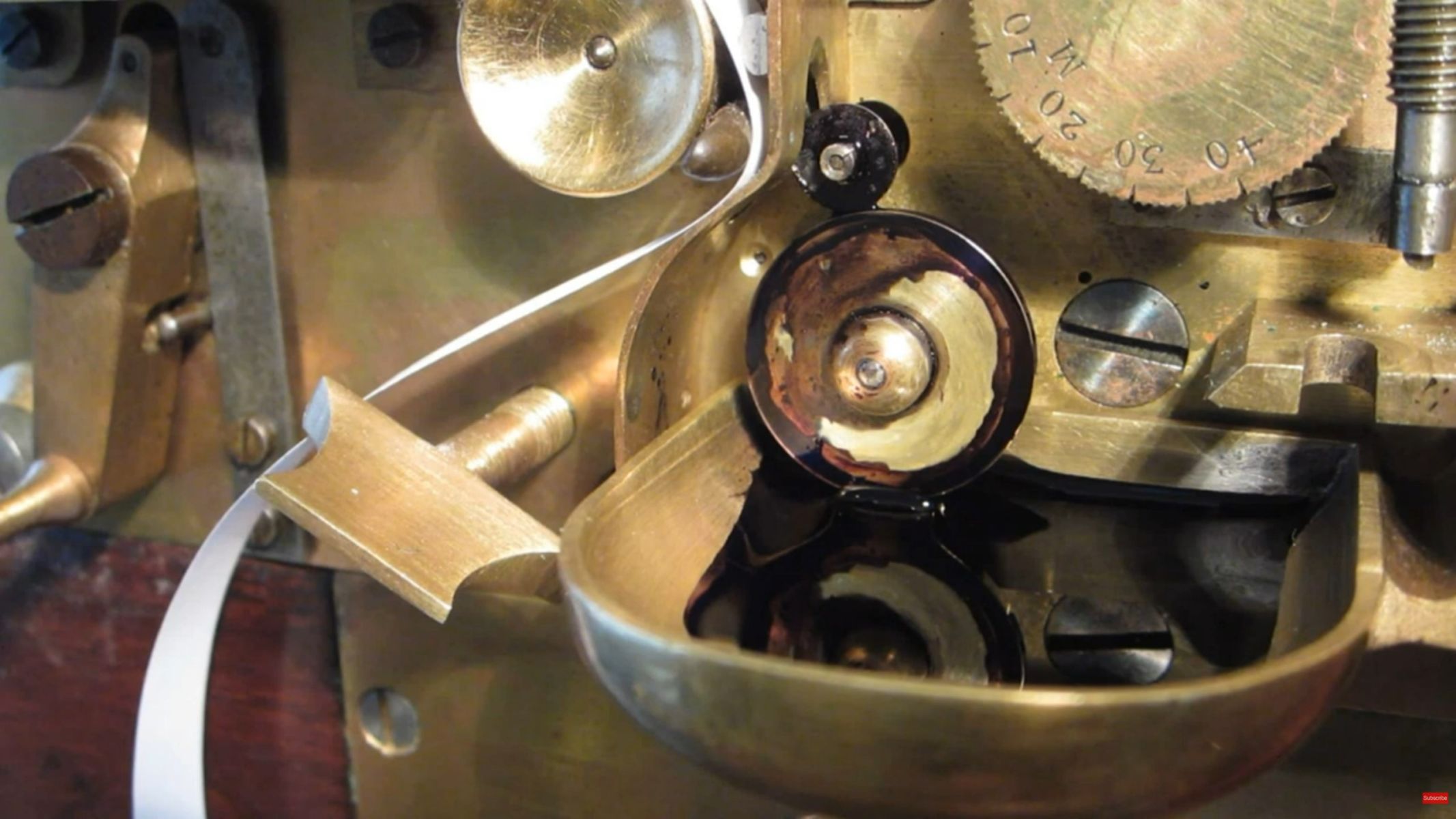 |
The Receiver operates just like any telegraph inking register. A blank paper tape is pulled through the machine, and a metal wheel, which is partially submerged in an inkwell, rotates as the Receiver operates. A second smaller wheel, which rubs against the larger wheel, then presses against the paper tape every time a Morse signal is detected, producing an ink mark on the paper tape.
As with the Transmitter, there is a lever in front of the unit to control the speed. (Left 3 pictures from Science Museum UK)
-------------
Hugh Small, from the UK, has made 2 excellent YouTube videos demonstrating how the Wheatstone telegraph system operates:
https://www.youtube.com/watch?v=4pApMSBitaw (Perforator & Transmitter operation)
https://www.youtube.com/watch?v=P-2Pr8sughI (Receiver operation)